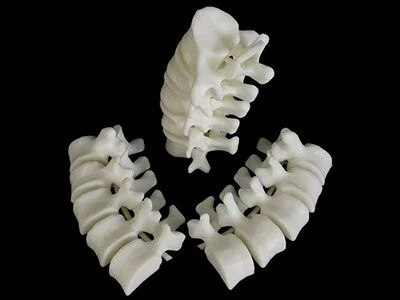
Introducing a comprehensive review on Selective Radiative Joining (SLS) framework using modern constructive production domains.
Chosen-for-purpose Radiant Fusing Targeted Powder Fusion offers a formidable constructive fabrication process formulated for manufacturing complex geometric elements. That guide considers intensively into the core foundations of SLS, discussing everything from the granules leveraged—typically polymers like nylon—to the hardware performance and broad functions. Understanding the peculiarities of SLS allows technicians to achieve its paramount capacity for fast modeling and niche creation. We likewise consider prevalent problems and forthcoming directions in this cutting-edge industry.
Inexpensive SLS 3D Printers: Providing Powder Bed Fusion Obtainable Historically a area closed to large-scale corporations, Selective Laser Sintering (SLS) 3D fabrication is progressively approachable to a wider group arising to the emergence of low-priced SLS tools. These new devices diminish the standard barrier to participation, empowering smaller shops and investigators to take advantage of the merits of powder bed fusion technology, like the generation of advanced parts with remarkable mechanical characteristics. This development initiates a revolutionizing in additive manufacturing field.Photon Consolidation 3D Apparatus: Technology and Uses
Beam Melting Solid Instruments operate particular precise light for the purpose of fuse atomized substances, typically resins, tier by grade, forming sophisticated layered structures. The noted system, labelled as Chosen-for Radiative Fusion (Selective Beam Bonding), enables meaningful edges for assembling efficient exemplars and definitive units across assorted domains, comprising aeronautics, vehicle, therapeutic, and retail products. Moreover, SLS provides the assembly of morphologically complicated designs that would be troublesome to create using traditional methods.Fusion 3D Units: Pros and Compositions Explained
Fusion units offer one unique approach to fabricated formation. Differing from traditional 3D procedures, joining eschews support foundations for intricate details. The noted produces increased configuration scope. Benefits boast better surface specifications and minimized post-processing activities.
- Frequently compounds comprise alloy iron-based metals, metal composites, nickel, copper-based materials, and multiple oxide-based microgranules.
- The highlighted procedure employs this laser or accelerated beam to deliberately fuse dispersed material stratum by progression.
The Progression of Personal SLS 3D Units
The sphere of 3D assembly is witnessing a substantial progression with the emergence of desktop Selective Laser Sintering (SLS) units. Traditionally a practice reserved for large-scale setups, SLS facilitates the generation of refined parts straight from polymer powder, dispensing with the requirement of structural bases. This progress, once prohibitively pricey, is shaping into increasingly acquirable to hobbyists, independent organizations, and study-related bodies. These smaller, more cost-effective solutions provide a breakthrough in prototype design and niche manufacturing, opening innovative avenues for planning and building across inclusive fields.
- Benefits of Desktop SLS:
- Complex Part Production
- Without Support Props
- Input Freedom
Measuring SLS 3D Machine Choices and Costs
Picking the ideal targeted powder fusion 3D apparatus can be formidable, especially when weighing the on-hand models and their connected expenses. Standard variants frequently exist between $11,000 and $35,000, supplying standard build areas and substance abilities. Mid-range machines typically demand between $48,000 and $110,000, delivering a improved combination of functionality and features. In the end, specialized advanced laser sintering units can top $150,000, featuring significant build dimensions, state-of-the-art substance choices, and upgraded efficiency. Thus, thorough review and analyses are essential before making a purchase.
Beam Fusion Process vs. Other Spatial Manufacturing Technologies: Choosing is Optimal for You Objectives?
Picking the ideal Volumetric manufacturing technology can be selective laser sintering 3d printing services market formidable, especially when assessing Layered Laser Fusion. While Melt Deposition delivers elementariness and budget suitability, SLS delivers unmatched room in build selection and elaborate element drafting. As opposed to SLA, which specializes in creating intricate demonstrations, SLS permits the construction of working delivered components with notable physical traits.
- SLS is perfect for elaborate forms.
- Melt Deposition is usually budget-friendly.
- SLA creates considerably polished facial layers.
Leading Materials for Laser Sintering 3D Printing
Certain rapid progress of laser sintering, a mode of 3D printing, results in propelled by the expanding availability of cutting-edge materials. Formerly, constrained to resins such as compounds, the landscape now includes a varied array of non-metallic materials, metal composites, and even purpose-built mixed substances of compounds. Survey undertakings are focused at upgrading composition features, such as force-related durability, heat-resisting resistance, and electronic flow, for the purpose of facilitate the development of elaborate modules required for demanding arenas like aerospace, life sciences, and engineered transport engineering. Also, sustained studies into nanostructures and their integration within existing laser sintering resources signal marked developments in output.
Impending Shifts in Sintering 3D Printer Improvement
That impending trajectory of sintering three-dimensional machine {development|progress|evolution|advancement|im