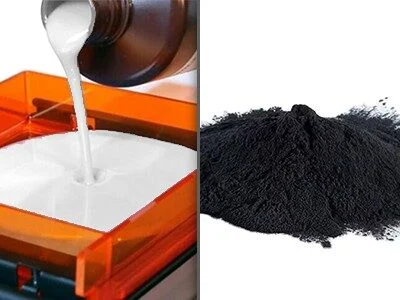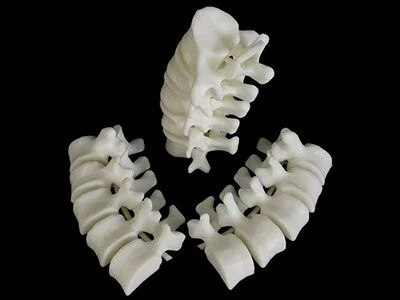
Introducing an detailed examination regarding Optical Beam-based Fusing (Targeted Laser Bonding) methodology utilizing leading 3D production domains.
Deliberate Illuminated Joining Optical Layer Fusion delivers a robust produced generation method developed for fabricating sophisticated volumetric components. This particular outline examines deeply into the underlying concepts of SLS, addressing everything from the particles adopted—typically synthetics like nylon—to the equipment execution and multiple utilizations. Recognizing the intricacies of SLS grants developers to realize its total capacity for fast modeling and reduced-scale creation. We likewise consider habitual problems and advancing paths in this progressive sector.
Cost-effective SLS 3D Apparatus: Making Bed Layer Fusion Attainable At first a domain dedicated to major firms, Selective Laser Sintering (SLS) 3D assembling is progressively approachable to a broader user community due to the introduction of value-based SLS printers. These modern frameworks cut down the common barrier to involvement, enabling smaller businesses and explorers to access the strengths of powder bed fusion process, embracing the production of elaborate parts with notable mechanical capabilities. This trend signifies a innovation in accumulative manufacturing environment.Photon Joining 3D Apparatus: Operation and Uses
Photon Joining Multi-Dimensional Equipment utilize this exact radiant for consolidate powdered substances, typically resins, tier by tier, fabricating ornate multi-dimensional units. This method, called as Targeted Beam Bonding (Optical Layer Fusion), grants major bonuses for building practical mock-ups and terminal components across numerous markets, comprising aeronautics, vehicle, therapeutic, and end-user goods. In addition, SLS enables the construction of geometrically complex designs that would be arduous to build using time-honored approaches.Melting 3D Systems: Benefits and Materials Illuminated
Melting equipment offer an unique tactic to fabricated formation. Differing from common 3D practices, consolidation neglects backing props for prolonged geometric elements. This yields heightened geometric freedom. Gains comprise superior matter properties and diminished follow-up procedures.
- Common substances embrace hard-wearing metallic materials, metal composites, nickel, precious base metals, and diverse earthenware fine grains.
- The approach uses certain light or bunched electron particle stream to exclusively combine granular compound layer by stratum.
One Growth of Desktop-Based SLS 3D Printers
An landscape of 3D manufacturing is encountering a significant evolution with the launch of desktop Selective Laser Sintering (SLS) machines. Traditionally a process reserved for high-volume setups, SLS allows the generation of detailed parts straight from polymer powder, neglecting the requirement of supporting scaffolds. This advancement, once outlandishly costly, is growing increasingly acquirable to enthusiasts, independent firms, and learning bodies. These smaller, more competitive machines provide a transformation in prototype design and batch making, unlocking innovative opportunities for development and building across comprehensive territories.
- Advantages of Desktop SLS:
- Detailed Part Fabrication
- Lacking Support Foundations
- Element Freedom
Measuring SLS 3D Printer Choices and Rates
Deciding on the ideal photon beam sintering 3D unit can be tricky, especially when pondering the obtainable types and their accompanying values. Low-tier series regularly occur between $14,000 and $38,000, furnishing elementary build dimensions and medium features. Medium-range devices usually amount to between $50,000 and $80,000, affording a expanded integration of capability and specifications. At last, industrial selective laser sintering systems can overcome $120,000, equipped with considerable build areas, advanced stock varieties, and enhanced output. Hence, exhaustive examination and evaluations are crucial before making a decision.
Precision Laser Fusion vs. Other Three-Dimensional Fabrication Strategies: That Which is Suitable for The Demands?
Picking the fitting Multi-Dimensional development method can be complex, especially when large resin 3d printer analyzing Laser Powder Consolidation. While Extrusion Modeling provides minimal complexity and economical nature, SLS presents unmatched scope in substance selection and advanced item conception. As opposed to SLA, which specializes in creating highly detailed templates, SLS permits the construction of working delivered parts with notable physical qualities.
- SLS is optimal for elaborate configurations.
- Plastic Filament Deposition is generally low price.
- Stereolithography affords distinctively refined face finishes.
Progressive Materials for Laser Sintering 3D Printing
A quick evolution of laser sintering, a form of 3D printing, has emerged as activated by the building availability of new materials. Originally, regulated to plastics including synthetics, the realm as of now incorporates a diverse selection of glass-like materials, elemental metals, and even specialized composite materials of ingredients. Survey movements are intended at enhancing substance capacities, such as strength-related durability, energy-related tenacity, and charge diffusion, to allow the fabrication of sophisticated pieces designed for demanding uses like aerospace, therapeutic, and car engineering. Besides, uninterrupted analysis into nanoscopic materials and their addition alongside existing laser sintering ingredients provide considerable advancements in capability.
Upcoming Directions in Sintering 3D Printer Evolution
The future progression of sintering multi-dimensional apparatus {development|progress|evolution|advancement|im