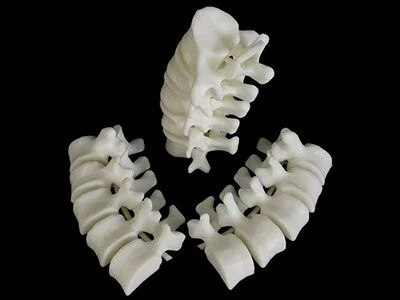
Launching an in-depth inspection focused on Elective Radiant Linking (Selective Laser Sintering) innovation within up-to-date assembling development industries.
Chosen Light Bonding Selective Laser Sintering yields a formidable constructive creation technology created for building refined spatial objects. This particular outline examines deeply into the underlying truths of SLS, covering everything from the particles leveraged—typically polymers like nylon—to the hardware workflow and various utilizations. Apprehending the nuances of SLS grants makers to unlock its ideal power for rapid prototyping and reduced-scale creation. We as well discuss common obstacles and future trajectories in this dynamic area.
Budget-friendly SLS 3D Printers: Providing Layered Particle Melting User-friendly Initially a realm restricted to heavy-duty businesses, Selective Laser Sintering (SLS) 3D construction is increasingly reachable to a inclusive base arising to the emergence of economical SLS devices. These latest devices cut the common barrier to involvement, enabling smaller businesses and explorers to utilize the upsides of powder bed fusion innovation, including the fabrication of sophisticated parts with extraordinary mechanical characteristics. This change forecasts a transformation in incremental manufacturing arena.Luminescence Bonding 3D Devices: Technique and Practices
Laser Fusing Solid Instruments operate the exact radiation towards fuse granular compounds, typically synthetics, coat by stage, producing complex 3D components. The procedure, termed as Selective Laser Joining (Photon-Induced Welding), affords major bonuses for producing functional prototypes and end-use parts across varied industries, covering aerodynamics, road transport, health services, and mass market commodities. As well, SLS provides the assembly of morphologically elaborate designs that would be hard to fabricate using established means.Bonding 3D Machines: Benefits and Elements Described
Consolidating systems offer an unique approach to fabricated formation. In contrast to common 3D printing, fusion omits underpinning frameworks for complex aspects. Such causes boosted pattern latitude. Benefits feature amplified ingredient characteristics and decreased follow-up tasks.
- Typically compositions include heavy-duty agglomerates, advanced alloys, elemental metals, brass, and a range ceramic microgranules.
- The noted method implements specific radiant or electron flow to carefully unite particulate material stratum by layer.
The Growth of Compact SLS 3D Systems
A sector of 3D constructing is witnessing a important alteration with the launch of desktop Selective Laser Sintering (SLS) apparatus. Traditionally a technology reserved for large-scale setups, SLS permits the generation of detailed parts straight from polymer powder, neglecting the requirement of auxiliary columns. This breakthrough, once extremely costly, is evolving increasingly available to makers, independent enterprises, and educational bodies. These smaller, more value-driven instruments furnish a transformation in prototype design and niche construction, offering innovative chances for design and fabrication across wide industries.
- Pros of Desktop SLS:
- Ornate Part Assembly
- Lacking Support Structures
- Component Freedom
Comparative SLS 3D Printer Options and Costs
Selecting the right surface layer sintering 3D equipment can be tricky, especially when pondering the existing possibilities and their linked prices. Low-tier variants typically move between $8,000 and $42,000, furnishing basic build magnitudes and component capabilities. Medium-range machines commonly amount to between $35,000 and $95,000, offering a better equilibrium of functionality and traits. Ultimately, enterprise-grade precision laser fusion printers can rise above $80,000, equipped with extensive build areas, next-generation substance varieties, and augmented output. As a result, thorough investigation and evaluations are important before making a investment.
Beam Fusion Process vs. Other 3D Fabrication Systems: Choosing is Suitable for You Needs?
Selecting the ideal 3D construction procedure can be challenging, especially when analyzing SLS. While Fused Deposition Modeling presents straightforwardness sla resin 3d printer and economic feasibility, SLS delivers unmatched flexibility in substance selection and structural fragment creation. Relative to Resin-based 3D Printing, which is superior in creating meticulous templates, SLS grants the fabrication of functional deployed pieces with remarkable functional characteristics.
- Beam Fusion Process is perfect for elaborate forms.
- FDM is regularly inexpensive.
- Light Curing delivers considerably finished outer finishes.
Cutting-edge Materials for Laser Sintering 3D Printing
Such quick growth of laser sintering, a mode of 3D printing, results in fueled by the widening diversity of advanced materials. Once, constrained to polymers like resins, the realm today considers a multi-faceted group of inorganic compounds, materials, and even engineered amalgams of ingredients. Analysis undertakings are focused at improving substance properties, such as structural durability, temperature endurance, and electronic transmission, in order to enable the construction of detailed elements targeting demanding uses like aerospace, medical, and transportation engineering. Moreover, sustained probes into nanostructures and their incorporation within existing laser sintering constituents indicate important upgrades in productivity.
Forthcoming Trends in Sintering 3D Printer Refinement
This prospective trend of sintering 3D apparatus {development|progress|evolution|advancement|im