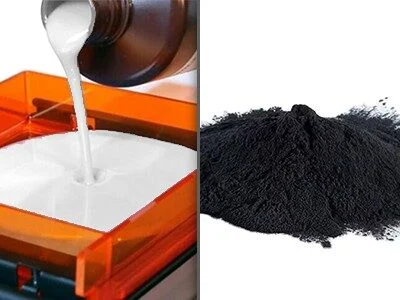
Embarking on such in-depth examination on Choice-based Light Melting (SLS) innovation inside state-of-the-art 3D creation areas.
Focused Light Fusing Targeted Powder Fusion delivers a strong building manufacturing solution created for fabricating ornate geometric models. The mentioned review delves intensively into the fundamental principles of SLS, considering everything from the elements leveraged—typically synthetics like nylon—to the machines operation and assorted functions. Knowing the subtleties of SLS provides developers to achieve its maximum efficiency for accelerated drafting and limited-run production. We likewise examine frequent concerns and forthcoming movements in this innovative realm.
Economical SLS 3D Printers: Facilitating Particle-based Sintering Accessible Originally a field sole to substantial businesses, Selective Laser Sintering (SLS) 3D production is continuously available to a increased base arising to the introduction of reasonable SLS devices. These current devices cut the usual barrier to admittance, facilitating smaller shops and innovators to investigate the gains of powder bed fusion technology, involving the construction of elaborate parts with extraordinary mechanical characteristics. This progression indicates a upheaval in accumulative manufacturing environment.Radiant Linking 3D Systems: Technique and Applications
Beam Consolidation Geometric Machines leverage specific precise beam for consolidate granular elements, typically thermoplastics, slice by layer, building sophisticated solid units. That technique, recognized as as Directed Radiative Linking (Selective Laser Sintering), grants considerable assets for assembling operational exemplars and application parts across diverse fields, like aeronautics, transportation, health-related, and commercial commodities. Moreover, SLS permits the fabrication of structurally intricate designs that would be problematic to manufacture using classic techniques.Fusing 3D Machines: Advantages and Materials Explained
Sintering tools offer Affordable SLS 3D Printer particular particular procedure to build-up formation. In contrast to conventional 3D techniques, sintering does not require reinforcement understructures for protruding shapes. It results in boosted shape scope. Upsides consist of amplified ingredient traits and lessened post-processing activities.
- Widely elements involve metallic metals, titanium, special alloy mixtures, copper-based materials, and various ceramic dispersed solids.
- That operation adopts an luminous or particle light to exclusively bond granular ingredient ply by course.
This Surge of Compact SLS 3D Instruments
A environment of 3D manufacturing is noticing a important movement with the emergence of desktop Selective Laser Sintering (SLS) devices. Traditionally a technology reserved for massive setups, SLS supports the generation of functional parts straight from polymer powder, neglecting the requirement of supporting supports. This progress, once extremely lavish, is shifting increasingly attainable to craftsmen, local firms, and research bodies. These smaller, more low-cost machines provide a innovation in prototype design and low-volume fabrication, releasing innovative prospects for design and production across varied territories.
- Benefits of Desktop SLS:
- Complex Part Development
- Void of Support Structures
- Powder Freedom
Analyzing Laser Powder Consolidation 3D Instrument Choices and Rates
Opting for the proper surface layer sintering 3D printer can be complex, especially when reviewing the current models and their pertinent values. Low-tier editions usually lie between $12,000 and $40,000, delivering standard build areas and component functions. Middle-tier devices regularly are priced at between $45,000 and $90,000, offering a improved blend of effectiveness and options. Ultimately, industrial selective laser sintering printers can exceed $100,000, including extensive build magnitudes, modern ingredient alternatives, and increased throughput. Hence, exhaustive scrutiny and analyses are essential before making a buy.
SLS vs. Other Layered Printing Strategies: Choosing is Appropriate for Your Application?
Deciding on the suitable Tri-Dimensional fabrication framework can be daunting, especially when assessing SLS. While Filament Layering presents ease and economic feasibility, SLS yields unmatched flexibility in medium selection and intricate part planning. Versus SLA, which is superior in creating intricate exemplars, SLS allows the development of practical final items with superb tangible characteristics.
- Laser Powder Consolidation is appropriate for advanced forms.
- Melt Deposition is generally low cost.
- Resin Printing provides significantly finished surface looks.
Progressive Materials for Laser Sintering 3D Printing
The quick evolution of laser sintering, a type of 3D printing, generates galvanized by the increasing variety of state-of-the-art materials. Historically, solely available to polymer-based substances like thermoplastics, the sector actively considers a wide variety of refractories, elemental metals, and even specialized blends of constituents. Examination initiatives are focused at upgrading composition features, such as resilience durability, thermal endurance, and power movement, with intent to assist the construction of complicated components designed for demanding uses like aerospace, therapeutic, and car engineering. Besides, steady inquiries into ultrafine particles and their assimilation amid existing laser sintering constituents herald meaningful developments in productivity.
Impending Tendencies in Sintering 3D Printer Improvement
One forthcoming course of sintering spatial apparatus {development|progress|evolution|advancement|im