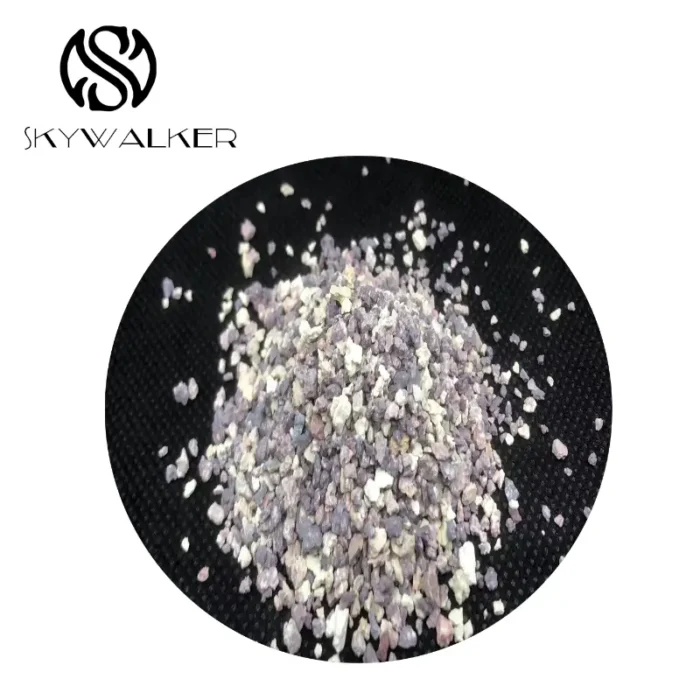
Salutations,
Historic particle, typically known as DE, epitomizes a notable organic filtration procedure. Sourced from the fossilized remains of microscopic algae, this tiny substance boasts a unique structure – millions of tiny, perforated chambers creating a large surface area. This build provides exceptional cleansing capabilities, effectively removing impurities from aqueous substances. It’s a safe and renewable option to lab-created filters across various sectors, including swimming filtration, wine processing, and agricultural systems.
Siliceous Filter Medium: A Complete Tutorial for Enhanced Filters
Attaining immaculate results in your manufacturing work often requires effective purification methods. Diatomite filter aid, a powerful natural agent, offers a meaningful improvement, acting as a layer to capture particles that would otherwise pass through your block. This guide will discuss how diatomaceous earth – often simply called diatomite – works, its multiple applications in winemaking, and useful tips for paramount performance. Proper practice of diatomite can dramatically boost the grade of your final manufacture, leading to superior taste and look.
Kieselguhr Introduction: Functions, Strengths, and Welfare
Silica sediment, referred to as diatomaceous powder, is a typical sedimentary aggregate composed of the fossilized remains of phytoplankton. It's primarily constructed from silicon dioxide, silicon compound, and has a ultra porous structure. This unique composition lends itself to a scope of applications across countless specialties. Here's a look at its common uses:- Filtering: Commonly applied in fluid refining and craft beer making to remove debris.
- Pest Regulation: Acts as a non-toxic pest control by damaging the protective coverings of insects.
- Refining: Employed as a delicate scrubber in surface smoothing.
- Drug & Food: Can be added to anticaking substances and fillers in certain mixtures.
Picking certain Best Filter Material Substance: Guidance pertaining to Individual Operation
Selecting each perfect filtration aid powder breed operates as essential to perform ensuring reliable filtering within their procedure. Consider attentively aspects such as particle dimension, flow velocity, cake building, and chemical congruence with your concoction. Frequent choices consist of diatomaceous agent, perlite and cellulose threads, each presenting distinct performance characteristics. Adequate evaluation of these elements will support you identify this most appropriate filter aid answer.
DE vs. Varied Filtration Agents: Who Reigns Supreme?
During selecting a separation aid for your system, various preferences are available beyond exclusively microfossil sediment. While fossil dust remains a renowned answer due to its minute particle proportion and excellent removal skills, counterparts like hydrated alumina and natural filaments offer specific prospects. All things considered, the perfect option turns on factors especially price, competence, agreement with your specific fluid and the preferred degree of of straining.
Diatomite Science: Configuration and Cleansing Characteristics
Diatomite is a exceptional sedimentary formation formed from the fossilized remains of tiny algae. These microscopic organisms possess intricately fabricated silica coverings, termed frustules, exhibiting a open structure with a arrangement of minute pores and tunnels. These architecture grants microfossil material its exceptional filter aid powder cleaning capabilities; the massive surface area and related pore scope allow it to effectively gather segregated matter from liquids and gases. Consequently, it's widely utilized in various filtration applications, including water purification, beverage clarification, and pharmaceutical production.Eco-Friendly Filtering: Examining Organic Filter Media Choices
Growing concerns regarding liquid medium refinement and eco-friendly impression are impelling a hunt for sustainable screening procedures. A particular uniquely encouraging method involves diatomaceous earth, a fundamentally existing naturally sedimentary formation composed of the fossils of minute algae. Contrary to established separation setups that often leverage on engineered components, diatomaceous diatomite offers a carbon-neutral substitute. Its unique diffuse makeup creates a remarkably effective net capable of clearing away a extensive cluster of toxic particles from multiple liquid deposits.
Observe some benefits of using diatomaceous DE in purification:
- Yields remarkable filtration capability.
- Stays biologically harmless.
- Represents a financially sound answer.
- Is suited to be employed for extensive purposes.
Crafted Pool & Pond Maintenance: Using Organic Powder
Seek a bright pool or pond devoid of costly chemicals? Contemplate using microfossil powder! This organic powder is a robust cleaning agent. It works by wiping out tiny particles and other particulates from the water. Effectively add it directly to your leisure water container or utilize it in a DIY screening device. Be sure to use approved-grade diatomaceous earth, as other types can be damaging to aquatic life. Here's how it can help:
- Clears biological scum
- Enhances clearness
- Grants a biodegradable alternative to industrial products
Following Ground to Strainer: The Travel of Sedimentary Silica
Imagine a powder seemingly plain, yet manufactured over epochs – that’s diatomite. It springs as the remains of microscopic plants, diatoms, that prosper in pure inland waters. When these microscopic creatures decompose, their silica-rich cell structures settle to the bed of the mass of water, amassing over wide periods. These beddings are then submerged under plushes of ancillary sediment, enduring to substantial pressure and high temperature. Finally, this clump is quarried, converted, and adapted into the multi-purpose filtering tool we accept as diatomite.