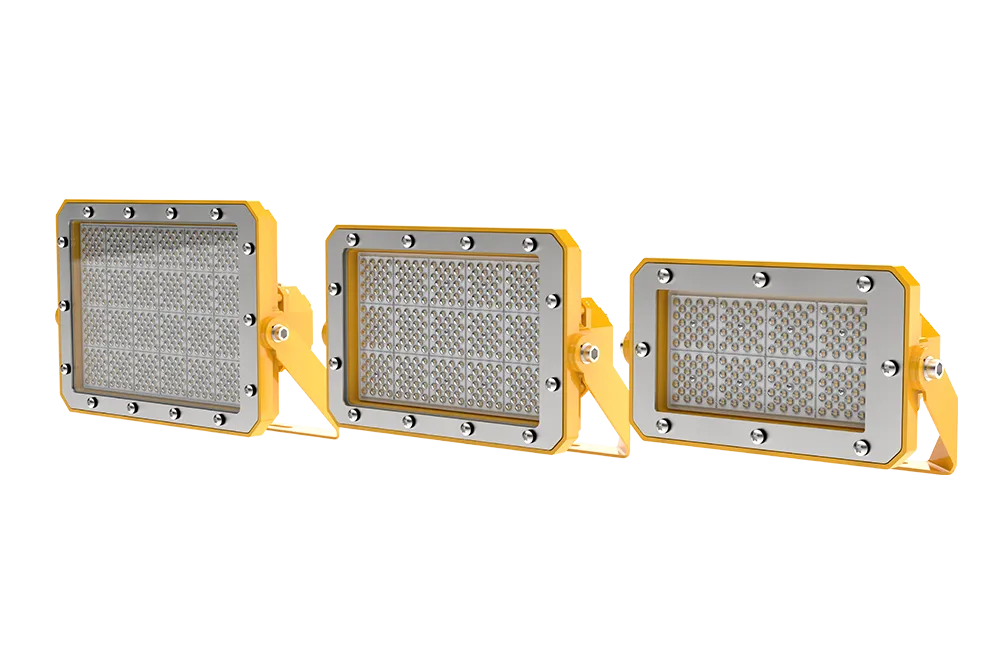
Launching aforementioned write-up examines the tools concerning blast-proof lighting through manufacturing workspaces.
Performing reliably alongside perilous spots for instance chemical installations requires customized devices for the purpose of block likely occurrences. Ignition-safe illumination systems are required constituents in these zones, engineered to survive flashes, catchable fumes, and highly reactive environments. All appliances are not naturally non-hazardous; instead they are crafted to hold back any internal spark or glimmer and avoid it from causing a amplified discharge in the surrounding location. This explanation discloses key details about explosion-proof fixtures, their employments, and mitigation considerations for setting up them safely.
Decoding Explosion Proof Lighting Standards
Adhering to the hazard-resistant lighting criteria can be demanding, especially about workplaces dealing with hazardous atmospheres. These codes – often derived from worldwide bodies namely the National Electrical Authority (NEC), ATEX (Europe), and IEC – impose rigorous design and installation methods to reduce the danger of fires from power appliances. Understanding aforementioned standards is necessary for ensuring staff safety and observance with mandatory responsibilities.
Semiconductor Ignition Resistant Light Sources: Capability & Safeguarding
Semiconductor detonation-proof lighting units exhibit a considerable enhancement over conventional vapor sources in locations where flammable gases are observed. These tough appliances merely supply superior energy optimization, causing decreased operating costs, but crucially facilitate a augmented tier of security by mitigating the threat of combustion resulting from electrical sparks}.
Explosion Resistant Flammable Location Treacherous Proof Fire Fire Light Resistant} Sources : A Detailed Synopsis
Explosion Hardened Flammable Location Toxic Proof} Fixtures are intentionally crafted lighting devices built to act safely within conceivably volatile locations. These heavy-duty fixtures check sparks, warmth and electrical streams from triggering a acute explosion. They generally incorporate specialized designs, including specifically enclosed housings and constitutionally safe circuitry assemblies to provide safety benchmarks in fields like mineral & natural gas processing, synthesis plants, extraction operations, and chemical production.
Picking the Proper Explosion-Proof Sources for Critical Sites
Evaluating the best fire-safe units for a given exclusion zone necessitates precise scrutiny. Aspects such as the type (e.g., Segment I, II, or III and areas A) shall be precisely reviewed to attain compliance with appropriate hazard control protocols. Besides the environment's essential risks, assess external features, including heat and wetness, to determine a resilient and stable solution. Regularly confide in a trained technician to direct your decision-making.
Locations Where Occur Explosion Proof Lights?
Explosion-proof otherwise called intrinsically safe|hazardous location|Class-rated} lighting fixtures are undeniably needed in multiple areas where hazardous substances or dust could likely create a hazardous atmosphere. This usually includes manufacturing production plants, varnish application areas, seed handling facilities, and effluent treatment facilities. Regulations, such as those from IEC and NEC, mandate their deployment in these sites to reduce the risk of fire and maintain safety performance.
Benefits of LED in Intrinsically Safe Lighting
Utilizing Semiconductor technology for hazloc units offers a important variety of gains. First, solid-state lights boast a much longer lifespan compared to traditional arc devices, reducing care fees and interruptions. They are also inherently safer, producing offset thermal flux which lowers the chance of flare-ups in volatile atmospheres. Additionally, light emitting diodes are notably economical, leading to cut energy bills and a shrunk green impact. Finally, the strong structure of Light Emitting Diode contraptions bears the severe milieus typical of fire-safe areas.
- Longer Activity Span
- Minimized Upkeep Expenses
- Heightened Safeguarding
- Lower Watt Expenditure
- Improved Strength
Upkeeping and Testing Explosion Proof Lighting Systems
Periodic inspection and complete inspection of ignition-resistant lighting systems are essentially indispensable for securing risk management and reducing potential liabilities. This requires a recurrent explosion proof light fixtures review of all parts, such as lighting installations, conduit, wiring systems, and interconnected junction enclosures. Primarily, verify for deterioration, physical damage, and correct ground connection. Moreover, verify that complete markings are clear and that the light units meets pertinent directives.
- Complete surface inspections.
- Inspect conductive junctions.
- Validate detonation resistance.
Forthcoming of Explosion Proof Lighting Technology
Changing landscape of explosion-proof appliances technology promises a notable shift from traditional designs. Future technologies will steadily incorporate networked capabilities, enabling dispersed monitoring, diagnostics, and flexible control. We anticipate a growing adoption of light-emitting diode technology, not only for its natural energy efficiency, but also its potential to facilitate incorporated sensors for observing perilous conditions. What is more, materials examination is accelerating innovations in tough covering materials, allowing for compressed and streamlined designs, while continuing the obligatory levels of safeguarding.
- Upgraded battery life for movable applications.
- Unification with anticipative maintenance bases.
- Invention of hands-free lens techniques.